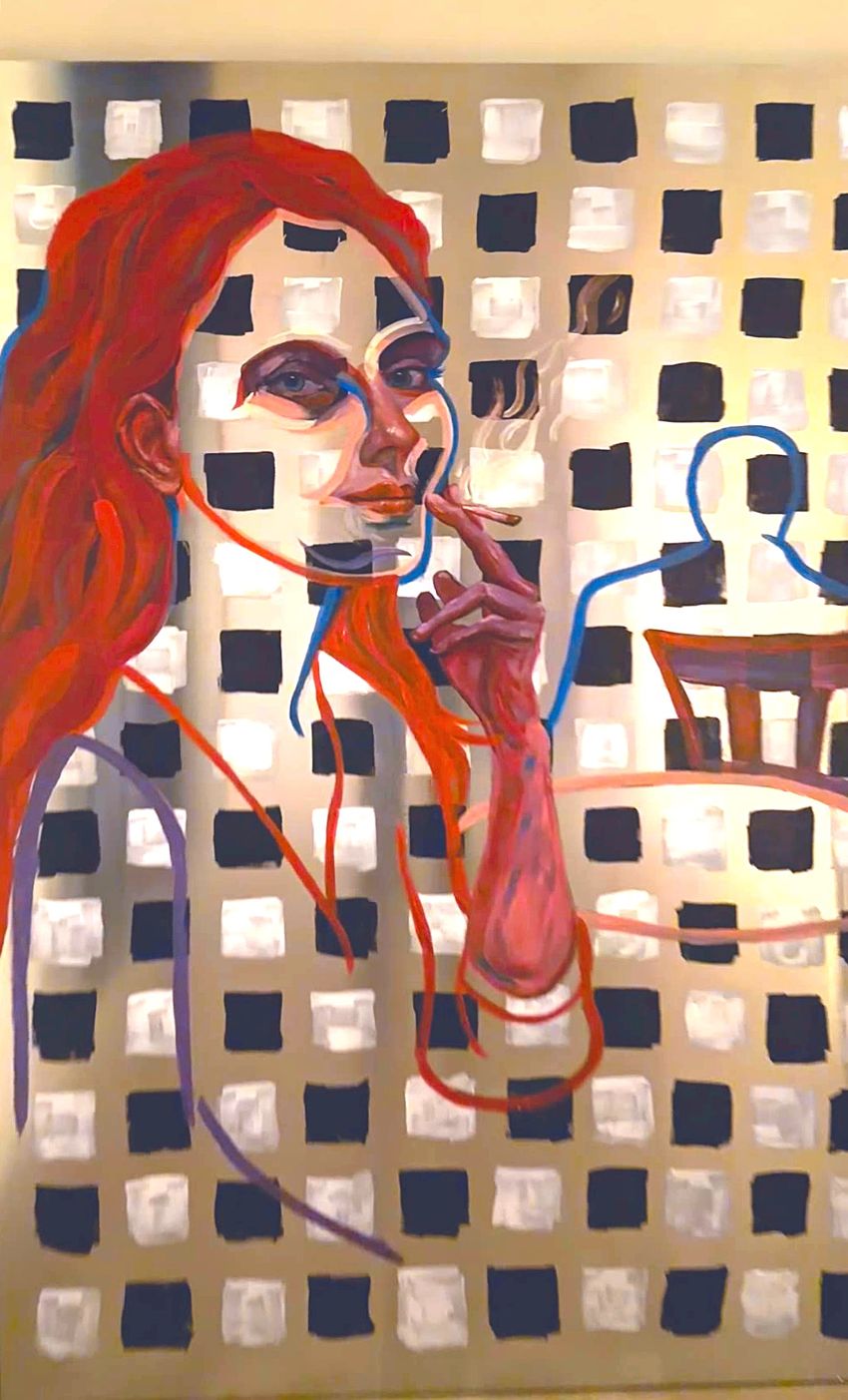
“In Plato, love is sometimes told as the longing to recognise a part of ourselves we have lost. As Rilke thought, it can be two solitudes protecting each other without wounding. As if you do not see a soul for the first time — you simply meet it, for the first time, in this life.”
“In this work I thought about our alternative lives — who we would be, how we would live, whom we would love in other universes. And if our paths truly crossed in another dimension: here, in this life, would we still recognise each other?”
“There is love at the centre of this work — but not a flat, single-layered love. Rather, that old familiarity that appears inside you the moment you meet a stranger. In a café, in a restaurant, passing on the street — as if the moment is lived for the first time, yet the soul has known it long before.”
“That is why 'you' does not only mean you. It means the deep familiarity a soul remembers. Perhaps I did not see you for the first time. Perhaps I am only seeing you for the first time in this life — and in every universe, you were already 'me'.”